
 EN
EN

High-Efficiency Barcode Scanners: The Powerhouse Driving Industrial Production Line Efficiency
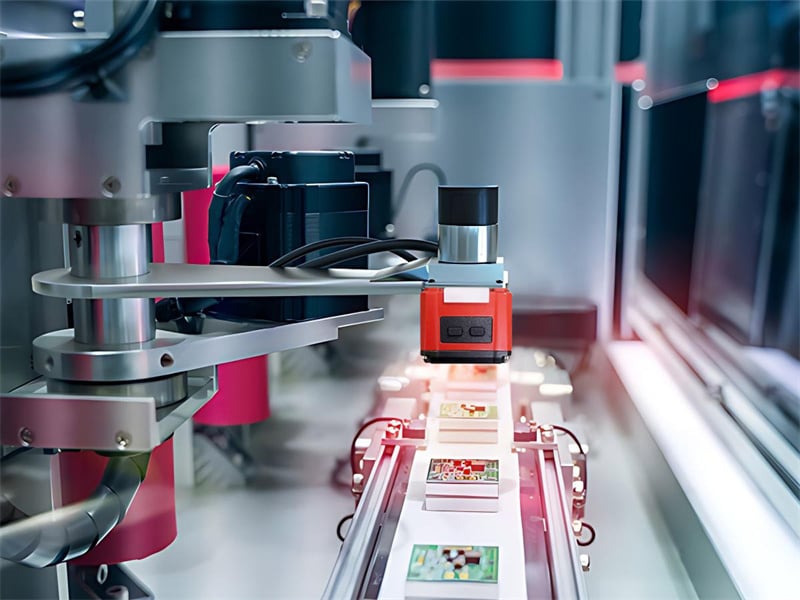
In today's industrial production landscape, assembly line operations have become the dominant manufacturing paradigm. Within this highly synchronized environment, the high-efficiency barcode scanner—a critical piece of supporting equipment—is playing an increasingly vital role, emerging as a powerful weapon for enterprises seeking to enhance productivity, ensure quality control, and drive operational excellence.
Technical Superiority: Speed and Accuracy Redefined
Industrial-grade barcode scanners deliver rapid and precise data capture through advanced optical systems and cutting-edge image processing technology. These sophisticated devices are engineered to instantly extract barcode information from products moving at high speeds along production lines, reliably decoding everything from standard one-dimensional barcodes to high-density two-dimensional QR codes. With scanning throughput reaching hundreds of codes per minute, they represent a quantum leap in efficiency compared to manual scanning methods. To illustrate the magnitude of this improvement, consider that traditional handheld scanners typically require approximately three seconds per scan and are susceptible to errors such as missed reads or incorrect decodings caused by suboptimal lighting conditions or variations in barcode print quality. In stark contrast, modern industrial fixed-mount scanners leverage AI-powered visual recognition technology to complete scans of even high-density, low-contrast barcodes in under 0.1 seconds, achieving read rates consistently exceeding 99.9 percent accuracy. This transformative speed enables seamless product processing on fast-moving assembly lines, effectively eliminating production bottlenecks caused by scanning delays and substantially boosting overall manufacturing efficiency.
Robust Design: Stability and Adaptability in Harsh Environments
Beyond raw speed, these barcode scanners demonstrate exceptional stability and environmental adaptability—qualities essential for continuous industrial operation. Featuring rugged, industrial-grade designs with robust Ingress Protection ratings reaching IP67, they operate reliably in the most demanding environments, including areas with high dust concentrations, exposure to oil and coolant contamination, and constant mechanical vibration. This durability effectively prevents costly production line downtime caused by equipment malfunctions or failures. Furthermore, these devices support multiple scanning modes and configurations that can be precisely tailored to specific manufacturing scenarios and product types. For instance, they can be configured for automatic continuous scanning mode, ideal for high-speed assembly line operations where products are in constant motion. Advanced models incorporate intelligent features such as automatic angle adjustment, where the scanner dynamically optimizes its field of view based on the detected orientation and placement of QR codes on products passing beneath it. This ensures optimal scanning performance regardless of how items are positioned on the conveyor, eliminating the need for precise product orientation and further streamlining production flow.
Intelligent Integration: Enabling Smart Manufacturing and Data-Driven Decisions
Perhaps most significantly, modern barcode scanners can be deeply integrated with automated control systems and manufacturing execution systems to achieve comprehensive intelligent management. They monitor production status in real-time, automatically verifying product compliance against predefined quality standards through instant barcode data comparison, then making corresponding processing decisions without human intervention. When the system detects anomalies—such as mismatched product codes or missing identifiers—the scanners immediately trigger alarm systems and activate diversion mechanisms to redirect problematic products to quality control stations for further inspection and handling. This automated quality gate effectively prevents non-conforming items from progressing through the supply chain and reaching end customers. Additionally, these scanners continuously record and analyze scan data, providing production managers with detailed performance reports and actionable, data-driven insights. This wealth of information helps enterprises optimize production processes, identify efficiency bottlenecks, and supports critical functions such as product traceability and real-time inventory management. By feeding accurate, timely data into enterprise resource planning systems, barcode scanners are driving digital transformation and enabling intelligent upgrades across manufacturing operations.
Proven Results: Real-World Impact Across Industries
In practical applications across diverse sectors, numerous enterprises have achieved remarkable operational improvements by adopting high-efficiency barcode scanning solutions. For example, a leading new energy battery manufacturer saw its single-line production capacity increase by 40 percent after implementing industrial-grade fixed scanning equipment along its assembly lines. Equally impressive, the defect rate dropped from 0.3 percent to just 0.05 percent—a sixfold improvement in quality. Both production efficiency and quality standards experienced qualitative, transformative gains. In the logistics sector, SF Express's Smart Warehouse deployed high-speed fixed scanners throughout its sortation system. The results were dramatic: parcel sorting efficiency surged from 800 items per hour with manual processes to an astonishing 6,000 items per hour with automated scanning, while simultaneously maintaining 100 percent sorting accuracy. This quantum leap in throughput has significantly enhanced logistics efficiency, reduced labor costs, and improved overall service quality for customers.
Conclusion: Indispensable Tools for Modern Manufacturing
In conclusion, high-efficiency barcode scanners have established themselves as indispensable equipment in modern industrial production lines. Through their rapid and accurate reading capabilities, exceptional stability and environmental adaptability, and deep integration with automation and information systems, they provide powerful, multifaceted support for enterprises striving to enhance production efficiency, ensure rigorous product quality, and drive comprehensive digital transformation. As manufacturing continues its evolution toward Industry 4.0 and smart factory paradigms, these unassuming but critical devices will remain at the forefront, enabling the seamless flow of information that parallels the physical flow of materials—truly becoming the eyes and ears of the intelligent factory.