
 EN
EN

How to Choose an Embedded Barcode Scanner Module: A Practical Guide for Five Key Applications
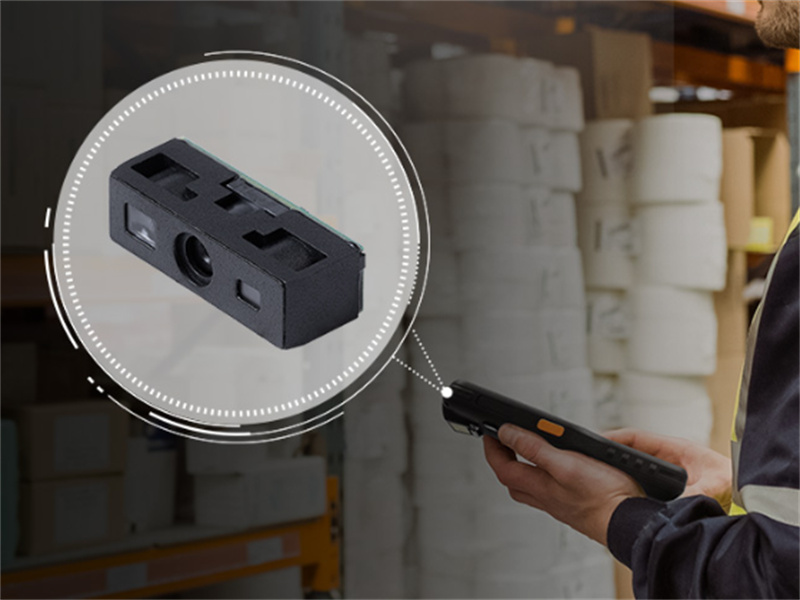
From self-service terminals and access gates to medical testing equipment, smart lockers, and industrial production lines, nearly every device that automatically reads barcodes now contains a scanner module. Although compact, this module acts as the device's "barcode-reading eye" and directly affects read rates and the overall user experience. Yet equipment manufacturers and system integrators often encounter the same problems during selection: a prototype performs well in testing, but missed reads appear after mass production; or the selected module is more expensive and powerful than the application actually requires. So how should an embedded scanner module be selected? Drawing on practical project experience, this guide explains how to choose the right solution for different application scenarios.
1. Start with the Barcode Medium: Screen or Paper?
This is the first major decision. In payment terminals, parcel lockers, access gates, and similar equipment, most users present barcodes on smartphone screens. These applications require a 2D scanner module specifically optimized for screen reading so that it can reliably handle low screen brightness, protective films, and blue-light-filtering screen protectors. The Hawkgaze RD4500R embedded barcode scanner module, for example, is specially tuned for screen-based barcodes. It can read high-data-capacity screen codes under low brightness and through various protective films. It also provides USB and RS-232 interfaces, a buzzer, a button, and direct communication through a DuPont-style connector, making it suitable for vending machines, e-commerce pickup lockers, ATM kiosks, queue management terminals, and other self-service payment equipment. For printed barcodes on shipping labels or product labels, focus instead on depth of field and tolerance for poor print quality. A standard 2D scanner module is usually sufficient, without paying extra for advanced screen-reading performance.
2. Check the Installation Space: Does the Embedded Form Factor Fit?
The key difference between a scanner module and a handheld scanner is that the module must be built into the host device. Before selecting one, confirm three dimensions: the module body size, the required panel cutout, and the lens field of view. Space behind a self-service terminal panel or gate reader window is often measured down to the millimeter, so slim and compact modules offer a clear advantage.
3. Interfaces and Protocols: A Major Factor in Development Time
Communication integration is unavoidable when a scanner module is built into a finished device. Mainstream modules typically support USB interfaces such as HID-KBW and USB-CDC, as well as TTL or RS-232 serial communication. Some industrial modules also support industrial Ethernet protocols. Choosing the wrong interface can require a PCB redesign and may delay the entire project. Give priority to scanner module suppliers that offer multiple interface options, complete development documentation, and host-side configuration tools. Before placing a volume order, request engineering samples and verify system integration under real operating conditions.
4. Match the Module to the Application
Self-Service Payment and Smart Lockers: Prioritize reliable reading of smartphone screen barcodes. A module optimized for screen reading can support both payment scanning and pickup verification.
Medical Testing Equipment: Test tubes, blood bags, and cryogenic vials often carry small barcodes on curved surfaces. Choose a medical scanner module, and consider a wide operating-temperature design for cold-chain environments.
Industrial Production Lines and Equipment Integration: Prioritize reading speed and resistance to interference. A megapixel scanner engine or fixed-mount 2D reader can support continuous barcode reading on production lines.
Access Gates and Entry Systems: Focus on a wide field of view and rapid response. Wide-angle, close-range scanner modules are a proven choice for passageway equipment.
5. Do Not Overlook These Practical Factors
Hardware specifications are only part of the decision. Three practical factors are often overlooked. First, test the decoding algorithm's tolerance for damaged, wrinkled, or low-contrast barcodes with actual samples. Second, evaluate lead times and batch-to-batch consistency, because a scanner module is a critical component and supply interruptions can delay delivery of the complete device. Third, consider the supplier's technical support response time. When a difficult barcode appears, fast access to tuning and troubleshooting support can matter more than a number on a specification sheet.
Conclusion
The core principle for selecting an embedded scanner module is simple: the application determines the specifications. Start by confirming whether the device will read screen-based or printed barcodes, then verify the available installation space and communication interface, and finally test performance with real samples. With years of experience in automatic identification, Hawkgaze supplies embedded scanner modules for self-service terminals, medical equipment, industrial production lines, access gates, and other applications. Support is available throughout the process, from model selection and sample testing to system integration and volume supply.