
 EN
EN

Smart Warehousing Gains Momentum as Barcode and RFID Data Capture Becomes a Critical Enabler
As large-scale e-commerce promotions become routine and manufacturers adopt more flexible production models, warehouse operations are shifting from people searching for goods to systems directing the movement of goods through real-time data. At the foundation of this transition is a barcode and RFID data capture framework that connects receiving, put-away, sorting, inventory counting, and outbound verification.
Based on Hawkgaze's experience in automatic identification, more warehouse operators now view the selection and deployment of data capture devices as a practical first step toward smarter warehouse operations.
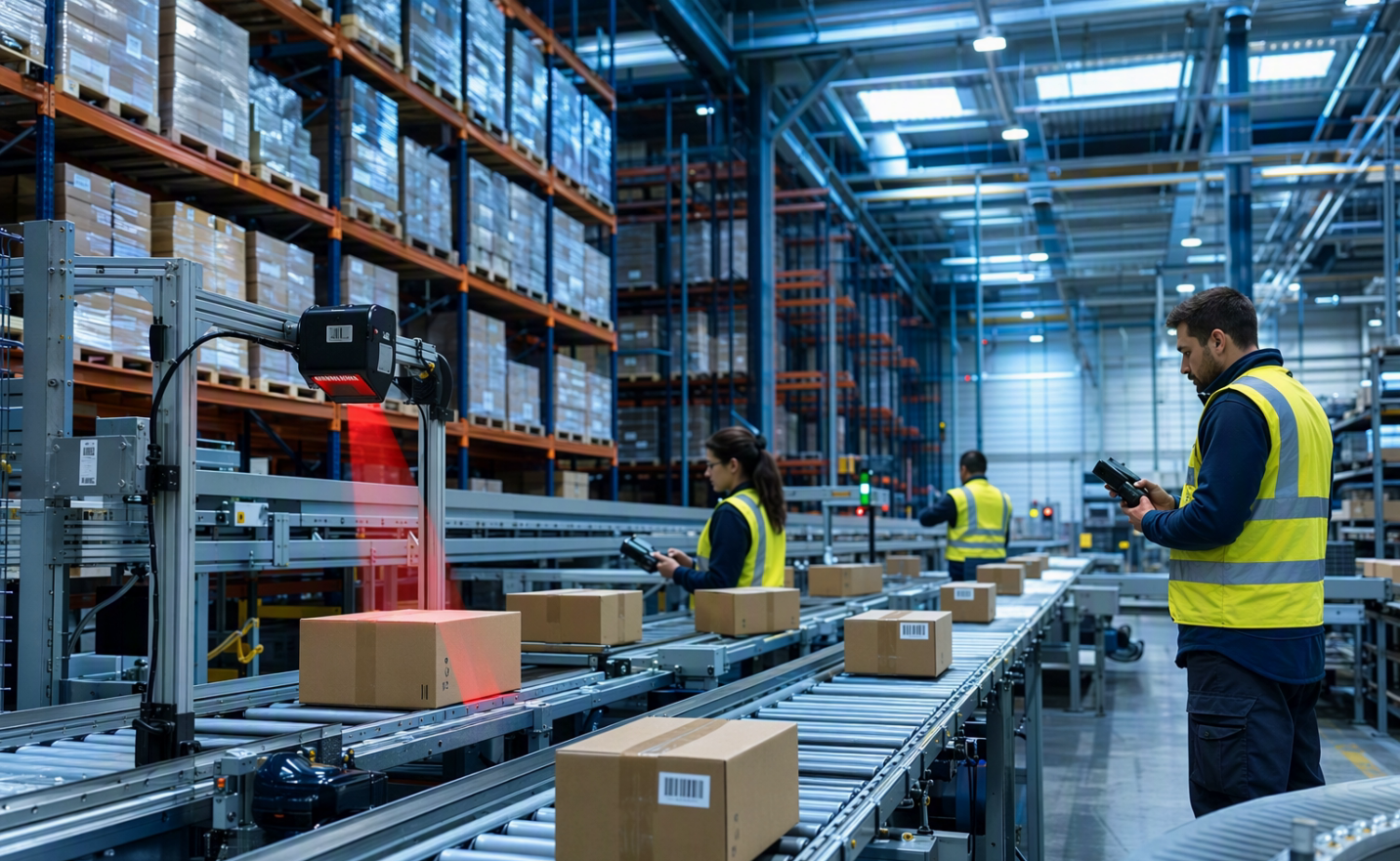
1. Three Data Capture Challenges in Traditional Warehouses
Across warehouse and logistics projects, three recurring bottlenecks stand out. First, manual data entry and paper documents delay updates and increase the risk of discrepancies between physical inventory and system records. Second, general-purpose consumer scanning devices may struggle in high-throughput sorting environments, where missed or incorrect reads can disrupt shipping. Third, returns, stock transfers, and inventory counting often lack mobile data capture tools, limiting real-time visibility for warehouse managers.
At the core of these issues is a disconnected workflow between frontline data capture and the warehouse management system (WMS).
2. Barcode and RFID as the Sensory Network of a Smart Warehouse
If the WMS is the brain of a smart warehouse, barcode scanners and RFID readers are the sensory network distributed across each operational step. At the receiving dock, fixed-mount scanners can automatically capture pallet barcodes and send the data to the system for put-away instructions. During outbound verification, rugged handheld terminals give operators immediate access to order, location, and batch information, helping accelerate checks and reduce manual errors.
For industries with frequent inventory counts, such as apparel and publishing, RFID portals and handheld readers can capture multiple tags in batches and substantially shorten full-warehouse inventory cycles. Barcode and RFID are not competing technologies; they are complementary options that can be combined according to cost, reading distance, data capacity, and workflow requirements.
3. Typical Applications in Receiving, Sorting, and Shipping
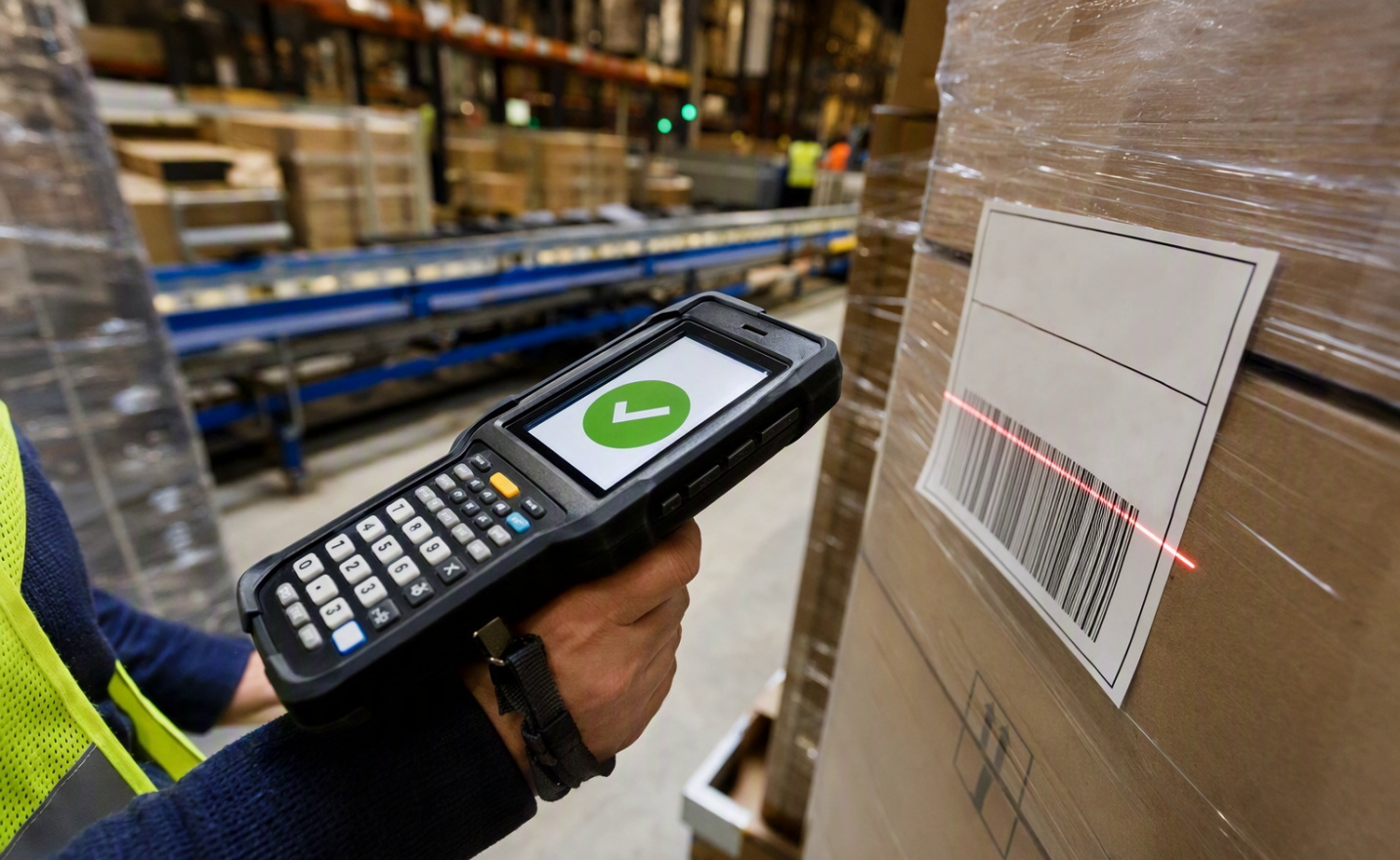
In outbound sorting, fixed-mount scanners installed along conveyor lines can read shipping labels as parcels move through the system and trigger routing instructions. Appropriate imaging and decoding technology also helps maintain reliable performance when labels are wrinkled, stained, or poorly printed. Operators can then use handheld terminals to rescan exceptions and complete secondary verification, combining automation with human oversight to support shipping accuracy.
In receiving, every step - from supplier delivery and inspection to labeling and put-away - can be recorded with a PDA. Inventory records are updated as goods move, giving managers a clearer view of stock status by location and helping physical movement remain synchronized with digital records.
4. Four Factors to Consider When Selecting Data Capture Equipment
-
Workflow fit: combine fixed-mount scanners, handheld terminals, and RFID readers according to the operational task instead of relying on a single device type.
-
Reading performance: evaluate decoding under realistic conditions, including damaged codes, low-contrast barcodes, and direct part marks (DPM).
-
System integration: confirm compatibility with the WMS, ERP, and related interfaces to avoid creating new data silos.
-
Lifecycle support: consider deployment, commissioning, secondary development support, maintenance, and spare-parts availability.
Building a More Connected Warehouse
Warehouse digitalization is an ongoing process. Each improvement in data capture can strengthen inventory visibility, turnover, and fulfillment performance. Hawkgaze will continue to develop barcode, RFID, and machine vision solutions that help warehouse and logistics operators build reliable, connected data capture workflows and compete more effectively across the supply chain.
What is the biggest obstacle to your next warehouse data capture upgrade: barcode quality, WMS/ERP integration, device durability, employee adoption, or return on investment? To learn more about warehouse data capture upgrade boarding solutions, contact Hawkgaze.